
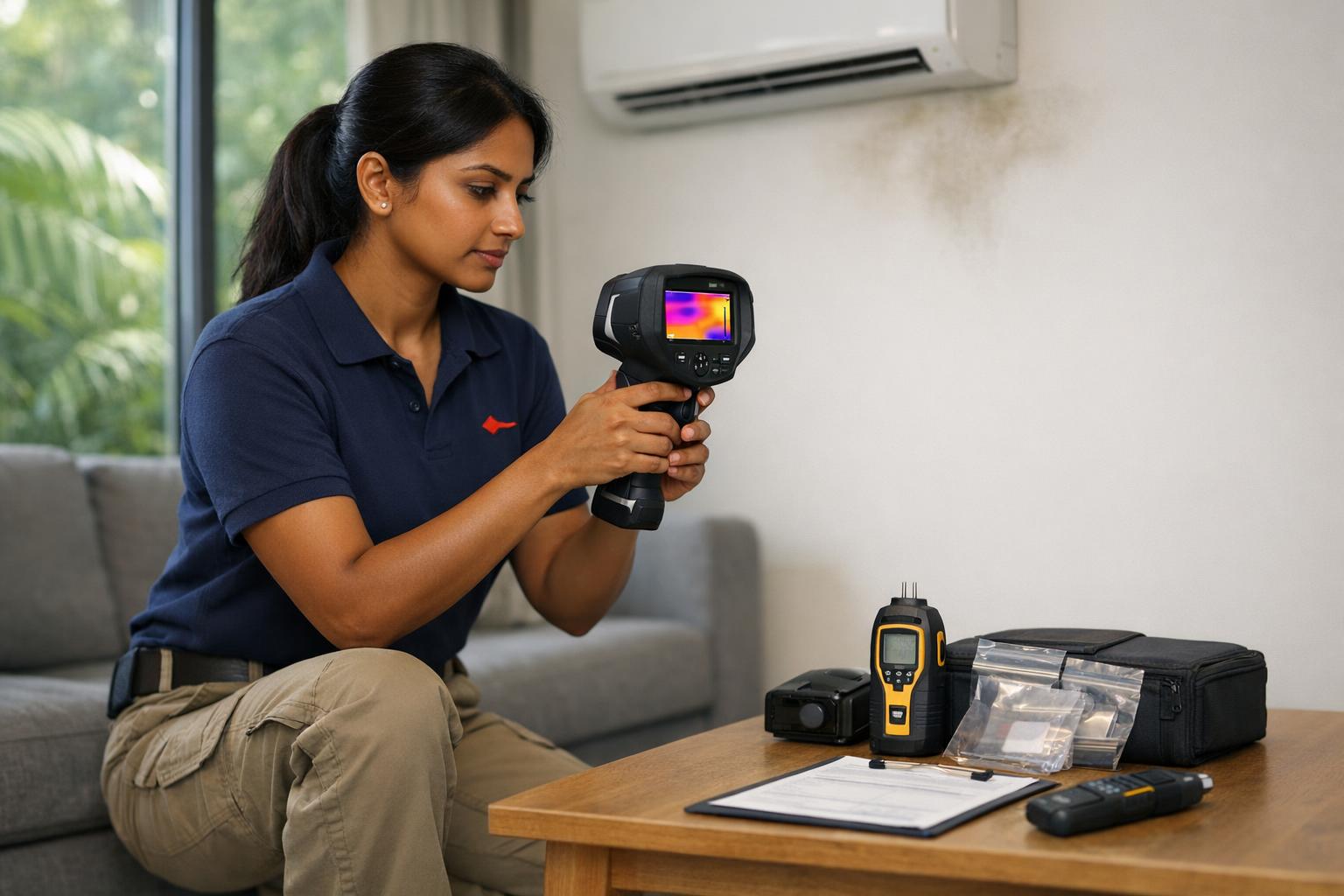
From a broad concern to a useful scope
Paints, adhesives, cleaning products and furnishings are among the possible indoor sources of VOCs. Identifying a recent product or activity is a useful lead, but it does not prove that it explains every concern in the room.
Describe where and when the issue occurs. Ask whether the proposed approach is a broad screening measurement, testing for selected compounds or another investigation. Confirm which compounds are included before comparing proposals described simply as “VOC testing”.
- List recent work and retain available product information.
- Describe normal occupancy and ventilation patterns.
- Share previous results and the purpose of any repeat test.
- Agree on preparation instructions and measurement locations.
Request a report that supports action
Ask for an explanation of the findings, the conditions recorded and the limits of the method. If the results prompt further testing, the next step should have its own clear question.
Any recommendations should connect to the actual property: a particular product, activity or ventilation question, for example. Keep records of changes made between visits so that later findings can be interpreted alongside what has changed.
Sources & further reading
US EPA: Volatile organic compounds and indoor air qualityQuestions about this topic
Does a total VOC result identify every chemical?
Do not assume so. Ask what the instrument or analysis measures and whether individual compounds are identified in the report.
Can an odour tell me which VOC is present?
An odour description is useful background, but a smell alone cannot confirm the chemical identity or concentration. Explain the pattern before choosing a test.