
Share the concern and its history
Start with the property type, town or postcode, affected rooms and when the issue first appeared. Mention leaks, recent heavy rain, air-conditioning use, renovations and any earlier cleaning or painting.
For a condo or managed building, explain who can arrange access and whether management already has a maintenance report. Avoid including private health records or other occupants' personal information.
- Describe visible changes and odours.
- Explain what has already been tried.
- Confirm how the team can contact you.
Agree the assessment and any testing
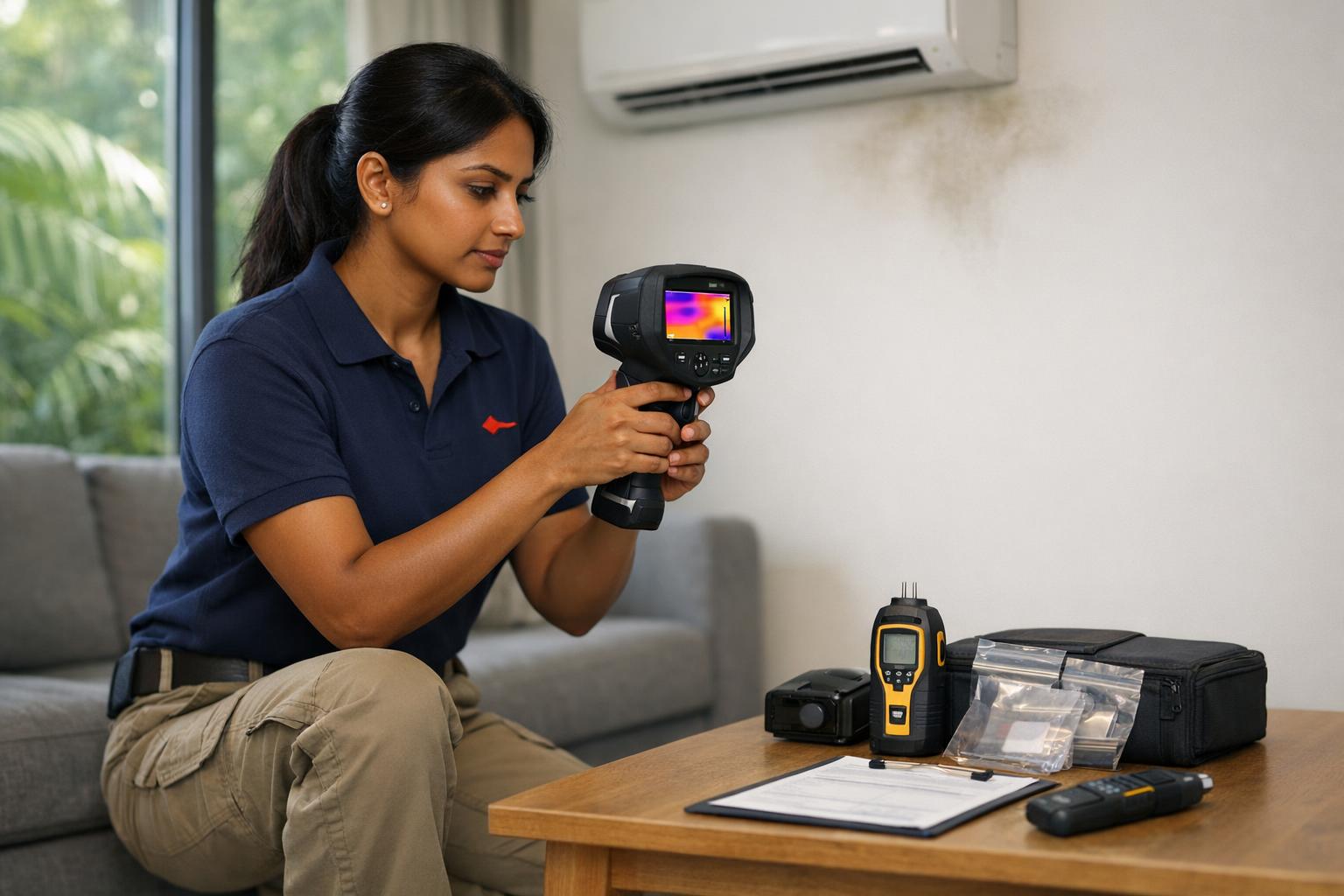
The next step may be a visual and moisture assessment, a discussion about suitable testing, or coordination with a specialist. An investigation should have a clear purpose and stated access limitations.
Ask which areas will be inspected, whether any sampling is proposed, what the deliverable will contain and which conditions could require additional work. An image or remote discussion cannot confirm hidden extent on its own.
Review the scope before work starts
If remediation or another service is proposed, discuss affected materials, access, protection of surrounding areas, preparation and waste handling. Ask who will address the moisture source and whether another trade or building-management team is needed.
The written scope should distinguish the work being quoted from optional investigation, repairs, testing or reinstatement. Pricing and scheduling are confirmed for the agreed project.
Plan the follow-up
After the work, review the completed scope, any remaining moisture or repair issues and the approach to monitoring. Ask what conditions should prompt another conversation.
Completion checks depend on the agreed task; do not assume that a single test result or a freshly painted surface proves that all future moisture problems have been resolved.