
Recognise a possibility without declaring a diagnosis
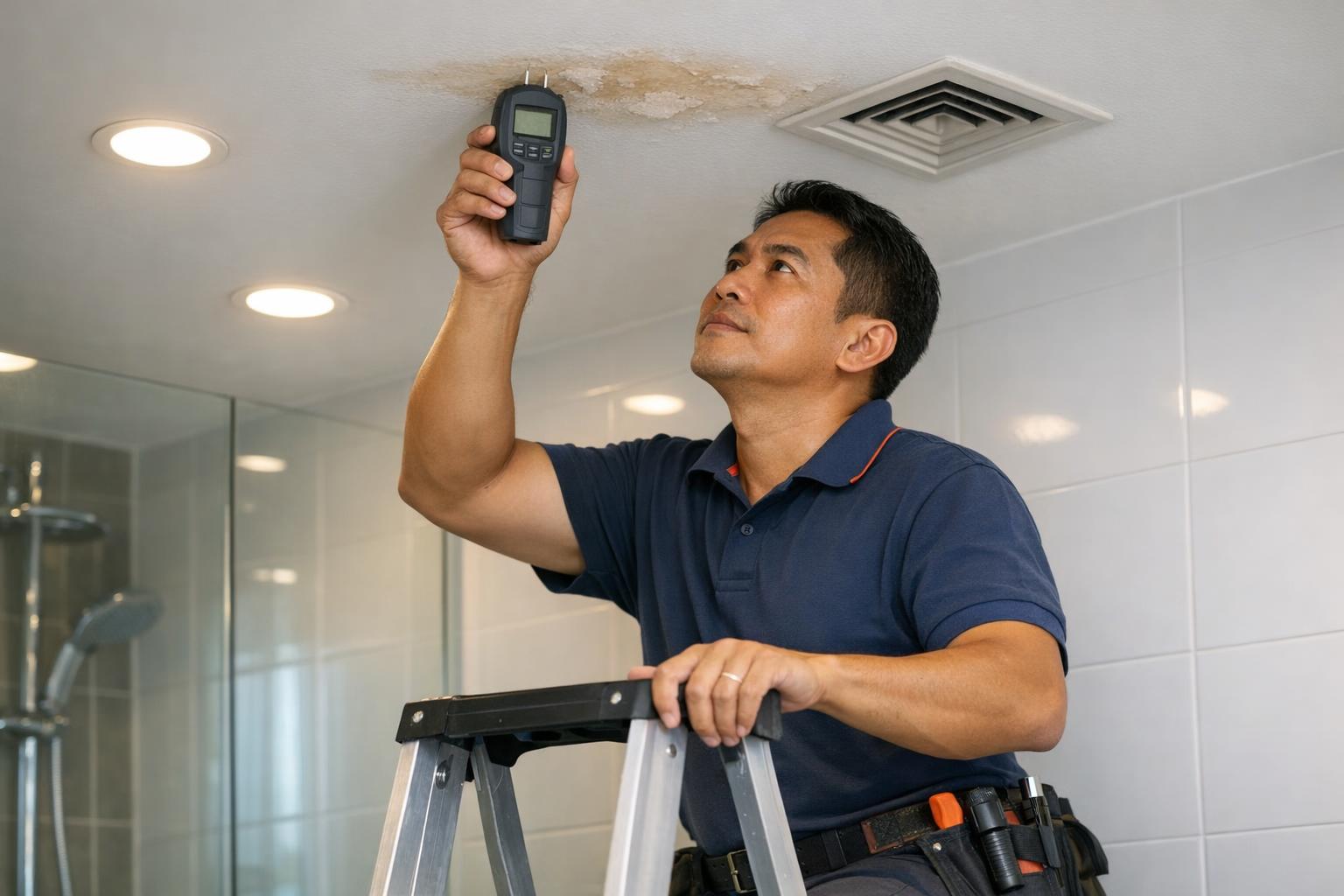
Condensation can form when humid air meets a surface cold enough for water to collect. It is one possible explanation for moisture near air-conditioned areas. A leak, drainage issue or another moisture source may need consideration too.
Describe the surface and location first. Note whether you saw droplets, staining, peeling paint or only an odour. A photograph taken once cannot show whether a patch is actively wet, seasonal or left behind by an older incident.
- Record the AC unit or outlet nearest the concern.
- Note the time, room use and whether the AC was running.
- Photograph the whole ceiling or wall as well as the patch.
- Include earlier AC maintenance dates if available.
Look for a repeatable pattern
Use a short observation log during normal occupation. Record when the area looks different and when it appears unchanged. Keep rain and any reported plumbing incident in the same timeline, without assuming either caused the marks.
Ask occupants to use the same room names and photograph labels. “Bedroom 2, window wall, Tuesday evening” is easier to compare than several messages calling the area “the damp corner.” Do not alter equipment settings as an experiment or open ceiling panels yourself.
- Separate observations from explanations suggested by others.
- Record any previous repair and the date marks returned.
- Note whether adjoining rooms show a similar pattern.
Give each professional a clear question
An AC maintenance enquiry can ask whether the relevant unit and its drainage need checking. A building inspection enquiry can ask how moisture patterns and nearby surfaces will be evaluated. Condo management can help coordinate access and existing maintenance information.
Ask for written findings that distinguish observations, likely explanations and recommended follow-up. If a service does not include opening concealed areas, make that limit explicit before work begins. Keep any treatment discussion connected to the moisture investigation.
Sources & further reading
WHO: Guidelines for indoor air quality — dampness and mouldQuestions about this topic
Does a damp patch near an AC unit prove condensation?
No. Its position is useful information, but several explanations may need checking. Share the timing, photographs and maintenance history with the person investigating.
Should I simply change the thermostat?
Avoid treating a setting change as a diagnosis. Ask the relevant professional to review the equipment and room conditions before recommending adjustments.